For Family Offices and owners seeking absolute control, maritime risk management requires moving beyond reactive financial hedging. Relying exclusively on an insurance policy leaves asset integrity vulnerable. True authority over a vessel is exercised from the engine room: rigorous technical management and proactive asset preservation form the sole technical defense to maintain operational reliability and protect capital value over time.
Beyond the Paperwork: Why Technical Management is Your First Line of Defense
A critical vulnerability in superyacht administration is the false sense of security that an insurance policy provides. While insurance is indispensable for mitigating the financial consequences of an incident, it is fundamentally reactive. It does not replace the proactive technical management required to prevent mechanical failures and preserve the vessel’s long-term value.
True technical peace of mind requires a proactive strategy. When licensed engineers and experienced captains oversee the yacht’s operational condition, a strong line of defense is established against the unpredictability of the sea. Implementing rigorous technical management delivers invaluable operational benefits:
- Early detection of catastrophic failures: Anticipating critical breakdowns protects the physical safety of crew and guests, reducing avoidable risks at sea.
- Maximized utilization: A mechanically sound vessel ensures the owner and guests can enjoy the yacht without interruption from unscheduled technical downtime.
- Clarity in maintenance processes: Removing ambiguity from the engine room directly connects field expertise to transparent budget execution.
Together, excellence in the engine room becomes one of the most effective tools for yacht asset protection. This sustained operational reliability is made possible by one central, non-negotiable element: a documented maintenance record.
The Maintenance Logbook: Your Shield Against Breakdowns and Depreciation
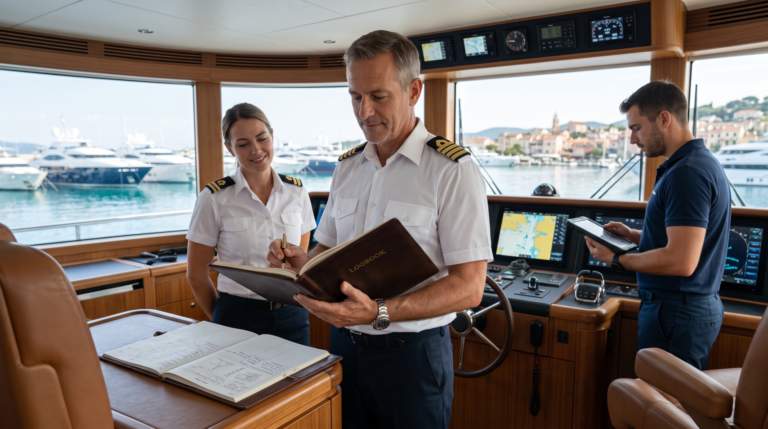
Preventive maintenance holds limited value without empirical evidence to support it. A meticulously maintained logbook goes far beyond regulatory compliance; it serves as the vessel’s medical record and a fundamental pillar in preserving asset value.
Recording every inspection, part replacement, repair, or modification to bulkheads and propulsion systems helps slow the yacht’s depreciation and preserve its long-term value. A prospective buyer or auditor doesn’t trust promises; they trust verifiable records. In this context, implementing a robust Safety Management System (SMS) and complying with the ISM Code demonstrates that the yacht operates under stringent international maritime safety standards. The logbook transforms maintenance spending into an auditable investment, laying the groundwork for a well-supported insurance claim.
How Technical Excellence Reinforces Your Insurance Protection
The greatest hidden risk for a Family Office is having a claim denied due to operational negligence. Insurers conduct exhaustive reviews following an incident, and gaps in the maintenance record can create significant challenges when establishing compliance with policy requirements.
By integrating specialized Yacht Management services, your insurance policy becomes a stronger layer of protection through the following strategic actions:
- Comprehensive operational traceability: Meticulous documentation of every technical protocol helps demonstrate compliance with maintenance requirements and reduces the risk of coverage disputes related to maintenance or negligence.
- Financial independence: A genuinely independent management model ensures that budget execution and financial reporting respond solely to the vessel’s operational condition, free of conflicts of interest or hidden commissions.
- Audit readiness: Maintaining an impeccable technical history, backed by certifications, allows the yacht to withstand legal or insurance scrutiny without unnecessary delays or complications.
As the nautical ecosystem grows more complex, it’s clear that safeguarding wealth demands predictive engineering. Combining field expertise with this level of rigor establishes superior protection, supporting true yacht asset protection and helping secure the future of your investment.
True Asset Control Starts in The Engine Room
Your vessel’s operational and financial peace of mind doesn’t depend solely on an insurer, but on an independent team and robust preventive protocols. Securing the value and integrity of your investment requires true yacht asset protection. Take your yacht management to the next level and discover how our technical expertise redefines safety at HYC World.
Frequently Asked Questions
What’s the difference between an insurance policy and preventive technical management?
An insurance policy is a reactive tool designed to compensate for financial losses after an incident occurs. Preventive technical management, carried out by certified engineers and captains, is a proactive strategy that anticipates failures, reduces the risk of accidents at sea, and helps ensure the vessel’s optimal performance.
Why is the maintenance logbook essential for Family Offices?
The logbook provides transparency and a clear audit trail of operational expenses, allowing wealth managers to account for every intervention and expense, avoid cost overruns, and ensure there are no hidden commissions in the management of the asset.
How does technical compliance affect a yacht’s resale value?
A yacht with a documented maintenance history under strict international regulations and technical oversight is better positioned to preserve its value over time. This demonstrable operational history builds confidence among future buyers and supports stronger asset value retention in the market.